 ?>
?>
 By
By What Every UK Business Needs to Know to Stay Compliant in 2026
Corporation Tax remains one of the most significant financial obligations for limited companies in the UK. As tax legislation continues to evolve, business owners must stay informed to avoid penalties, maximise available tax reliefs, and ensure their businesses remain compliant with HMRC requirements.
Whether you run a startup, an established SME, or a growing limited company, understanding upcoming Corporation Tax developments can help you make better financial decisions and prepare your business for the future.
At TT Accountancy Services (TTAS), we help businesses across London and the UK navigate changing tax regulations with confidence. This guide highlights what businesses should consider as they prepare for Corporation Tax changes in 2026 and beyond.
What Is Corporation Tax?
Corporation Tax is a tax paid by limited companies and certain organisations on their taxable profits.
Taxable profits may include:
- Trading profits
- Investment income
- Profits from selling business assets (chargeable gains)
Unlike Income Tax, Corporation Tax is not deducted automatically. Businesses are responsible for calculating their tax liability, filing a Company Tax Return, and paying the correct amount by the relevant deadline.
Why Keeping Up with Corporation Tax Changes Matters
Tax legislation changes regularly, and businesses that fail to keep up may face:
- Late filing penalties
- Interest on overdue tax
- Compliance investigations
- Missed tax relief opportunities
- Cash flow challenges
- Increased administrative costs
Planning ahead helps businesses remain compliant while making the most of available allowances and reliefs.
Key Corporation Tax Areas Businesses Should Review in 2026
Although every business is different, there are several important areas company directors should monitor.
1. Corporation Tax Rates
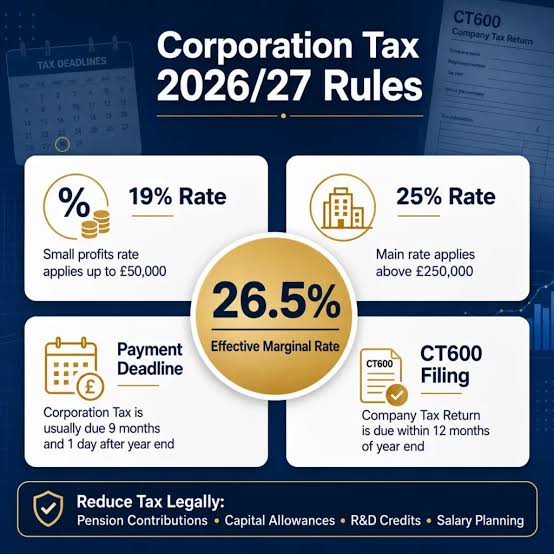
Corporation Tax rates may vary depending on your company’s level of taxable profits and current government policy.
Business owners should regularly review:
- Current Corporation Tax rates
- Profit thresholds
- Marginal relief eligibility
- Estimated annual tax liabilities
Understanding your expected tax bill helps improve financial planning throughout the year.
2. Filing Deadlines
Meeting Corporation Tax deadlines remains one of the most important compliance responsibilities.
Businesses should ensure they:
- Prepare annual accounts on time
- File Company Tax Returns before the statutory deadline
- Pay Corporation Tax by the required payment date
- Keep accurate accounting records throughout the year
Missing deadlines can result in avoidable penalties and interest charges.
3. Capital Allowances
Businesses investing in equipment, machinery, technology, or commercial assets should review available capital allowance opportunities.
These allowances may help reduce taxable profits by providing tax relief on qualifying business expenditure.
Planning purchases strategically can improve cash flow while reducing tax liabilities.
4. Research and Development (R&D) Tax Relief
Innovation remains an important driver of economic growth.
Businesses involved in developing:
- Software
- Engineering solutions
- Manufacturing processes
- Scientific research
- Technological improvements
may qualify for Research and Development (R&D) tax relief, subject to the prevailing HMRC rules and eligibility criteria.
Seeking professional advice can help determine whether your projects qualify.
5. Business Expenses
One of the most common reasons businesses overpay Corporation Tax is failing to claim allowable business expenses.
Examples may include:
- Office expenses
- Professional fees
- Business insurance
- Staff training
- Marketing costs
- Travel expenses (where allowable)
- Software subscriptions
Maintaining accurate records ensures legitimate deductions are not overlooked.
6. Director Remuneration Planning
Many owner-managed businesses review the balance between:
- Salary
- Dividends
- Pension contributions
- Other remuneration strategies
The most appropriate approach depends on individual circumstances and current tax legislation.
Professional advice helps ensure your remuneration strategy remains both tax-efficient and compliant.
Making Tax Digital (MTD) and Corporation Tax
The UK government continues to expand its Making Tax Digital (MTD) programme to modernise the tax system.
Although Making Tax Digital for Corporation Tax has not yet become mandatory, businesses should prepare by:
- Using compatible accounting software
- Maintaining digital records
- Improving bookkeeping processes
- Reviewing accounting systems
Businesses that adopt digital systems early often experience greater efficiency and improved financial reporting.
Common Corporation Tax Mistakes Businesses Make
Many companies encounter problems because they:
❌ Leave tax planning until year-end
❌ Maintain incomplete bookkeeping records
❌ Miss filing deadlines
❌ Fail to claim available tax reliefs
❌ Misclassify business expenses
❌ Ignore changes to HMRC guidance
❌ Attempt complex tax planning without professional advice
Avoiding these mistakes can save both time and money.
How to Prepare for Corporation Tax Changes
Preparing early gives businesses greater flexibility.
Consider the following steps:
Review Your Financial Records
Accurate bookkeeping provides the foundation for reliable tax reporting.
Forecast Your Tax Liability
Estimate your expected Corporation Tax bill throughout the financial year rather than waiting until accounts are finalised.
Monitor HMRC Updates
Tax legislation evolves regularly.
Keeping informed helps businesses adapt to new requirements quickly.
Invest in Cloud Accounting
Modern accounting software simplifies:
- Bookkeeping
- Tax reporting
- Financial analysis
- Record keeping
Cloud accounting also supports future digital tax requirements.
Seek Professional Tax Advice
Every business has unique circumstances.
Professional accountants can help identify:
- Tax-saving opportunities
- Compliance risks
- Allowable reliefs
- Financial planning strategies
How TT Accountancy Services Can Help
At TT Accountancy Services, we support businesses throughout every stage of the Corporation Tax process.
Our services include:
✔ Corporation Tax Returns
✔ Annual Accounts Preparation
✔ Bookkeeping Services
✔ Cloud Accounting
✔ Tax Planning
✔ Business Advisory
✔ Management Accounts
✔ Payroll Services
✔ VAT Returns
✔ HMRC Compliance Support
We work proactively with clients to minimise tax risks while supporting business growth.
Why Choose TT Accountancy Services?
Businesses across London trust TTAS because we provide:
- Personalised financial advice
- Transparent communication
- Proactive tax planning
- Digital accounting expertise
- Reliable compliance support
- Timely filing services
- Dedicated client support
Our objective is not simply to prepare tax returns—but to help businesses make smarter financial decisions throughout the year.
Corporation Tax is more than an annual filing requirement—it’s an important part of your overall financial strategy. Preparing early, maintaining accurate records, understanding available tax reliefs, and keeping up with regulatory developments can help your business remain compliant and financially efficient.
As the UK’s tax landscape continues to evolve, partnering with experienced accountants ensures you stay ahead of changes rather than reacting to them.
Need Help Preparing for Corporation Tax?
Whether you’re a startup, contractor, landlord with a limited company, or an established SME, TT Accountancy Services can help you navigate Corporation Tax confidently. Our experienced accountants provide proactive advice, accurate reporting, and tailored tax planning to help your business thrive.
Contact TT Accountancy Services today to ensure your business is ready for Corporation Tax changes in 2026 and beyond.
Frequently Asked Questions (FAQs)
1. Who needs to pay Corporation Tax in the UK?
Most limited companies operating in the UK must pay Corporation Tax on their taxable profits. Certain clubs, societies, and associations may also have Corporation Tax obligations.
2. When is Corporation Tax due?
Corporation Tax payment deadlines depend on your company’s accounting period. Most companies must pay within the statutory timeframe following the end of their accounting period, while the Company Tax Return has its own filing deadline. Always check your specific obligations.
3. Can I reduce my Corporation Tax bill legally?
Yes. Businesses may be able to reduce their Corporation Tax liability by claiming eligible business expenses, capital allowances, and applicable tax reliefs, while ensuring full compliance with HMRC rules.
4. Should I use accounting software for Corporation Tax?
Yes. Cloud accounting software helps businesses maintain accurate records, improve reporting, and prepare for the continued rollout of Making Tax Digital initiatives.