 ?>
?>
 By
By Introduction
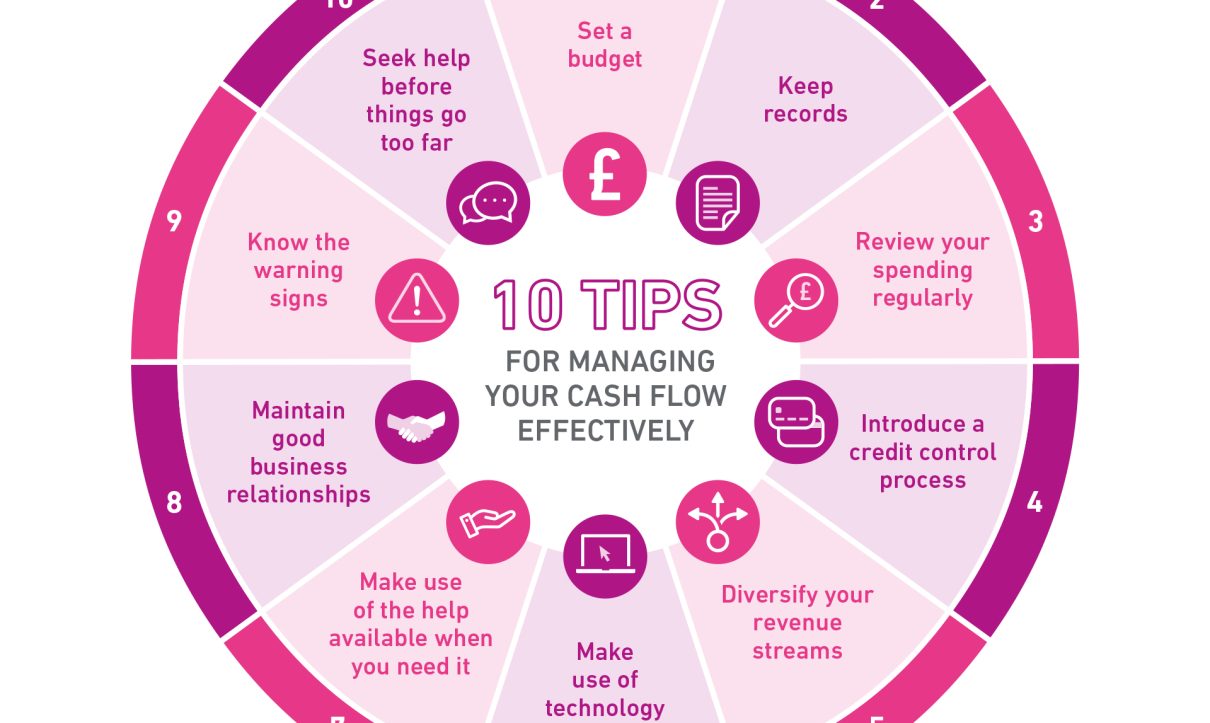
Ask any accountant what kills most sole trader businesses and the answer is rarely a lack of customers — it is running out of cash. You can be profitable on paper and still be unable to pay your suppliers, your VAT bill, or your Self Assessment tax demand when it arrives.
2026 brings specific cash flow pressures for the self-employed: increased National Insurance Contributions from April, the continued rollout of Making Tax Digital, and the usual January tax deadline that catches many unprepared. This guide gives you concrete strategies to take control.
Understand Your Cash Flow Cycle First
Before you can manage your cash flow, you need to know your cycle. This means mapping when money comes in (your income) against when money goes out (your expenses, tax, and overheads). For sole traders, three specific patterns are common:
- Seasonal income: income fluctuates significantly across the year (common in construction, retail, and hospitality)
- Late-paying clients: invoices are raised promptly but payment arrives weeks later
- Lumpy costs: large expenses arrive infrequently but hit hard when they do — including Self Assessment tax bills
Identifying which pattern affects your business most tells you where to focus first.
The Tax Bill You Forgot to Save For
The most common cash flow crisis for sole traders is a large, unexpected tax bill. It is rarely unexpected to HMRC — it is unexpected to you because you did not set money aside throughout the year.
A straightforward rule: set aside 25–30% of every payment you receive into a separate savings account designated for tax. This covers Income Tax at 20% or 40%, Class 4 National Insurance, and Class 2 National Insurance. If you are VAT-registered, add the relevant VAT amount on top and keep that separate too.
The moment you receive payment, transfer the tax portion. This one habit eliminates the most common cause of sole trader insolvency.
Payments on Account — Plan for Them
If your Self Assessment tax bill exceeds £1,000, HMRC requires you to make Payments on Account — advance payments towards the following year’s tax bill. These are made in two instalments: 31 January and 31 July each year, each equal to 50% of the previous year’s bill.
Many sole traders are blindsided when they realise that in their first year of paying tax, they effectively owe 150% of their expected bill — the balancing payment for last year plus the first payment on account for this year.
If your income has fallen significantly compared to the previous year, you can apply to HMRC to reduce your Payments on Account. This is worth doing — but must be done proactively before the payment is due.
Invoice Faster, Chase Promptly
Late payment is one of the most preventable cash flow problems. Research consistently shows that the longer after delivery an invoice is sent, the longer it takes to be paid. Invoice the same day work is completed or goods are delivered.
Set clear payment terms on every invoice — 14 or 30 days is standard — and automate payment reminders at 7 days before due, on the due date, and 7 days after. Most accounting software can do this for you.
Under the Late Payment of Commercial Debts Act, UK businesses are entitled to charge 8% above the Bank of England base rate on overdue invoices, plus a fixed recovery fee. Many sole traders do not know this, and fewer still use it — but the knowledge alone can encourage faster payment.
Build a Cash Reserve — Even a Small One
A cash reserve is a buffer that absorbs shocks: a client who pays late, a piece of equipment that fails, or a quiet month in an otherwise busy year. The standard recommendation is 3 months of operating expenses. For a sole trader just starting out, even one month’s reserve makes an enormous difference.
Treat your reserve like a fixed expense: contribute to it regularly and only draw on it for genuine emergencies — not to cover lifestyle spending during a slow month.
Use a Separate Business Account
Mixing personal and business finances is the single biggest cause of confusion around cash flow for sole traders. When income and expenses are mingled, it is almost impossible to know at any given moment how your business is performing.
Open a dedicated business current account. Many UK banks offer free or low-cost accounts specifically for the self-employed. Keeping finances separate also makes your bookkeeping significantly faster — which is increasingly important under Making Tax Digital.
Review Your Outgoings Quarterly
Costs have a way of creeping upward without attracting attention — software subscriptions, insurance renewals, supplier price increases. Set a quarterly reminder to review every line of expenditure and ask whether each cost is still delivering value proportionate to its price. Even modest savings compound meaningfully over a year.
When Cash Flow Gets Tight
If you find yourself struggling to meet obligations, act early. Options available to UK sole traders include negotiating extended payment terms with suppliers (most will prefer this to losing your custom), applying for a Time to Pay arrangement with HMRC if you cannot meet a tax deadline, and reviewing whether any invoices can be accelerated by offering a small early-payment discount.
The worst thing you can do is ignore the situation and hope it resolves itself. HMRC, unlike most suppliers, will add interest and penalties the moment a deadline passes.
Conclusion
Cash flow management is not complicated — but it requires consistent attention. Set aside tax from day one, invoice promptly, chase payments systematically, and build even a small reserve. These habits, practised regularly, will keep your business solvent through quiet months and busy ones alike. If you would like a personalised review of your cash flow position or help setting up a simple tracking system, our team is here to help.